
A lot of people have a strange relationship with speaking practice.
They avoid it right up until the moment they realize avoiding it is exactly why conversations still feel difficult.
The pattern repeats constantly. A learner spends months collecting vocabulary, saving grammar notes, completing exercises, and understanding more content online. Then a real interaction starts, and the brain suddenly behaves as if it had forgotten everything at once.
Not because the knowledge disappeared.
Usually, because speaking is its own skill.
A person can recognize hundreds of phrases passively and still struggle to answer simple questions naturally. Reading gives more control. Listening gives more control too because nobody expects an immediate response. Speaking removes that safety. Conversations move before the brain finishes organizing every sentence perfectly.
That is one reason AI speaking tools became so popular so quickly.
Learners finally got a way to practice communication itself without waiting for scheduled classes or depending entirely on tutors. More importantly, people started speaking more often because the process felt less stressful privately than it does in front of another person immediately.
Some language apps understand that shift much better than others.
1. ELSA Speak
ELSA Speak focuses heavily on pronunciation and speaking clarity.
The app uses AI speech analysis to help learners hear pronunciation issues they often do not notice themselves. Instead of centering lessons around grammar explanations or translation exercises, the platform turns speaking into the main activity almost immediately.
The platform includes:
- Pronunciation analysis
- Accent improvement exercises
- Speaking repetition
- AI speech feedback
- Listening and pronunciation drills
One reason learners stay with ELSA is the specificity of the feedback.
A lot of language apps simply mark pronunciation as “correct” or “incorrect.” ELSA breaks speech down much more carefully, helping users notice small sound differences, word stress issues, and speaking habits that affect clarity.
That level of detail helps learners become more aware of how they actually sound during conversations instead of only memorizing written language.
The platform works especially well for users who care strongly about pronunciation confidence and verbal clarity.
2. Promova
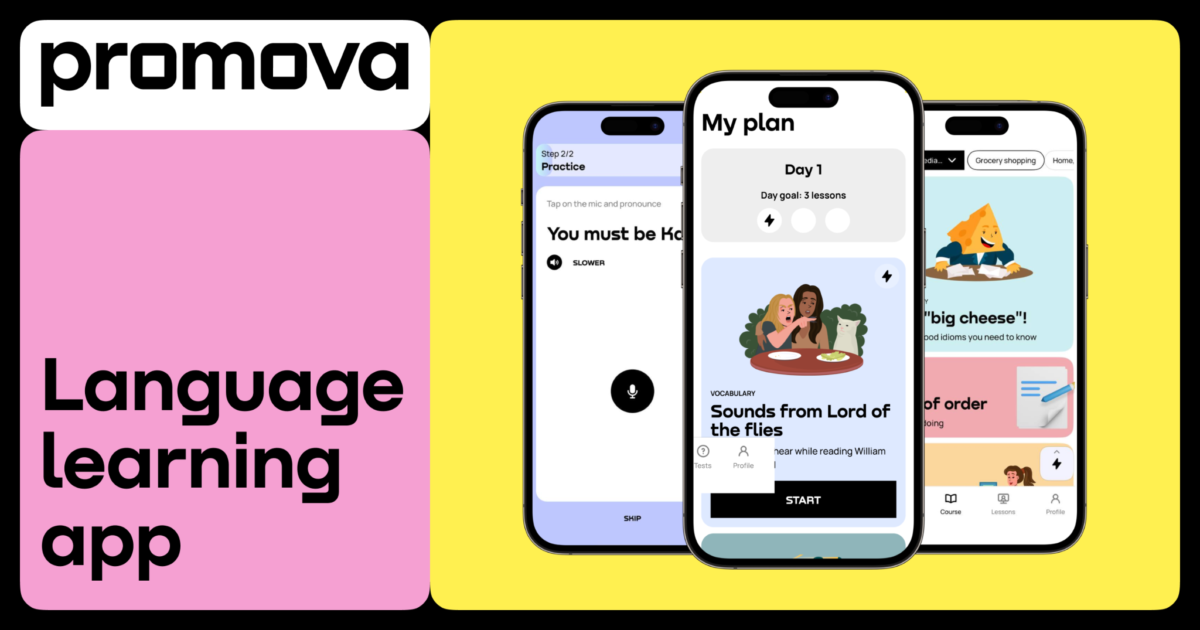
Promova is a language learning app for people who want to speak. It is built around structured self-study and AI speaking practice with a much stronger focus on active communication than traditional memorization-heavy language apps.
The platform constantly pulls learners back into spoken interaction instead of leaving them inside passive exercises for long stretches. Users move through AI conversations, role-play situations, pronunciation tasks, and shadowing exercises that require verbal participation instead of endless recognition drills.
The platform includes:
- AI tutor interactions
- AI role-play conversations
- Speaking-focused exercises
- Pronunciation support
- Shadowing lessons
- Public speaking content
One thing Promova handles well is conversational repetition.
A lot of apps repeat vocabulary mechanically. Promova repeats communication patterns instead. Learners hear themselves answering questions, reacting to prompts, practicing conversational rhythm, and building familiarity with spoken language continuously.
That becomes especially useful for people who already consume huge amounts of English passively through social media, movies, games, YouTube, podcasts, or work environments but still freeze during actual conversations.
The platform also stands out because of its accessibility features, which are still surprisingly rare inside language learning apps.
Promova includes:
- Dyslexia Mode 2.0
- White Noise Mode for ADHD learners
- Flexible lesson pacing
- Cleaner reading layouts
That changes the atmosphere of studying quite a bit. The app feels calmer and less mentally crowded than many heavily gamified competitors.
The course catalog also goes beyond standard beginner language material. Users can explore:
- English for Public Speaking
- Neurodiversity in the Workplace
- American Sign Language (ASL)
- English-to-English lessons
- Shadowing-based speaking exercises
Promova currently supports English, Spanish, French, German, Italian, Korean, Japanese, Chinese, Portuguese, Arabic, and Ukrainian.
For learners trying to build regular speaking habits instead of endlessly reviewing vocabulary lists, the platform feels especially practical.
3. Duolingo
Duolingo still feels much more playful than most language apps, but the platform has clearly moved toward speaking-focused learning over time.
The app now includes:
- AI conversation tools
- Speaking exercises
- Pronunciation tasks
- Interactive dialogues
- Listening-based activities
One reason Duolingo works well for daily speaking repetition is simplicity. The exercises are short enough that learners return frequently without feeling intimidated by huge lesson structures.
The platform also lowers emotional pressure around speaking. Conversations inside the app feel lightweight and low-risk, which helps beginners become more comfortable hearing themselves speak imperfectly.
At the same time, many users eventually want more spontaneous speaking practice than Duolingo provides. The app works well for building regular habits, but often becomes part of a larger learning mix once learners focus more seriously on conversation.
Still, for daily verbal repetition and approachable speaking exercises, the platform remains extremely popular.
4. Speak
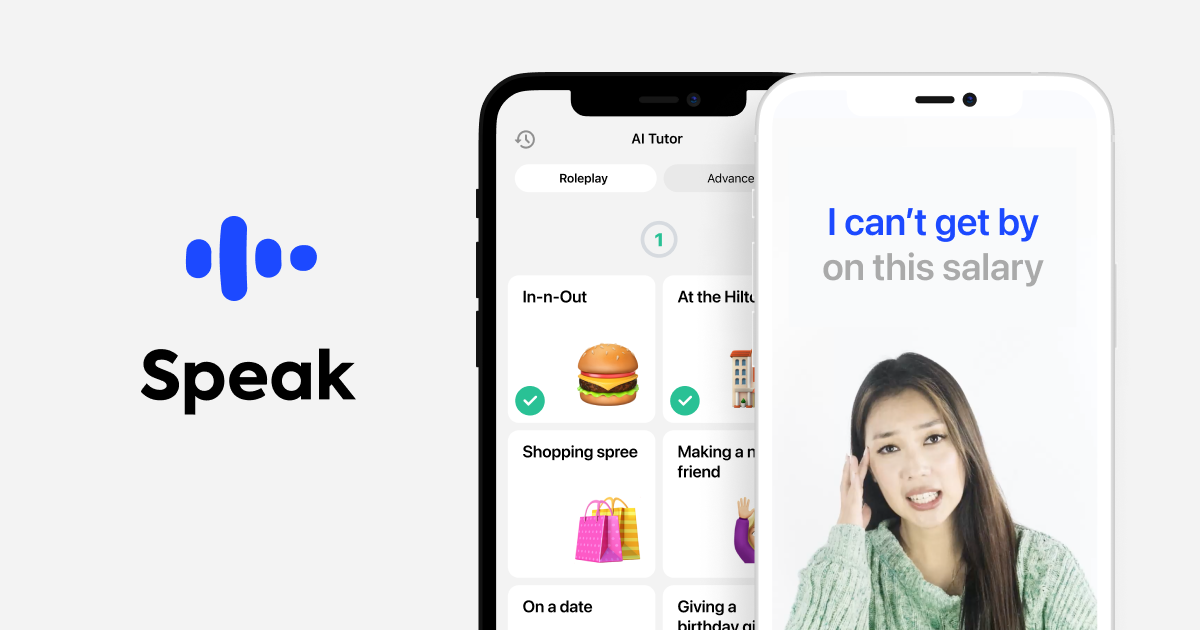
Speak is centered almost entirely around AI-powered conversation practice.
The platform pushes learners into verbal interaction constantly instead of relying mainly on passive review systems. Users answer questions, respond to prompts, repeat phrases, and move through simulated conversations throughout the learning experience.
The platform includes:
- AI conversations
- Real-time speaking practice
- Pronunciation feedback
- Conversation simulations
- Interactive dialogue exercises
One thing Speak handles particularly well is reducing hesitation.
A lot of learners mentally edit every sentence before speaking because they are afraid of mistakes. Speak encourages faster responses and more spontaneous interaction, which gradually makes conversations feel less intimidating.
The app feels closer to conversation training than traditional language study. That difference matters because many learners already know enough vocabulary to communicate. They simply lack comfort in using it quickly.
For users focused specifically on speaking confidence, the platform becomes useful almost immediately.
5. Busuu
Busuu combines structured lessons with communication-focused activities and native speaker feedback.
The platform offers:
- Speaking exercises
- Dialogue activities
- Pronunciation practice
- Vocabulary lessons
- Community corrections
- Listening exercises
One useful part of the platform is the correction system. Learners can submit exercises and receive feedback from native speakers directly, which exposes them to more natural communication patterns outside highly controlled lesson environments.
That interaction changes how mistakes feel.
Inside many language apps, errors become mechanical. Wrong answer. Continue. Busuu feels more conversational because real people respond to learner communication.
The platform also stays relatively organized without becoming overly rigid or visually overwhelming. Lessons move clearly from one activity to another while still keeping speaking practice present throughout the experience.
For learners who want conversation practice alongside more traditional lesson structures, Busuu creates a comfortable balance.
6. Mondly
Mondly builds language learning around short conversation-based exercises supported by AI speaking tools.
The platform includes:
- Chatbot conversations
- Pronunciation exercises
- Listening activities
- Speech recognition tasks
- Daily conversation scenarios
One thing Mondly does well is reducing overthinking.
The conversations are usually short and direct, which encourages users to answer quickly instead of spending too much time constructing perfect grammar internally before speaking.
The app also introduces practical situations very early, including travel dialogue, workplace communication, restaurant interactions, and everyday social exchanges.
That practical structure helps many learners stop treating language like a school subject and start treating it more like communication.
The speaking exercises feel approachable enough that users repeat them regularly without building anxiety around mistakes.
7. Memrise

Memrise originally became known for vocabulary learning, but the platform increasingly focuses on spoken language and conversational exposure.
The platform includes:
- Video-based listening exercises
- Pronunciation practice
- Conversational phrase repetition
- Native speaker video clips
- Speaking-focused review tasks
One thing learners often like about Memrise is that the language feels less scripted than many traditional app dialogues.
The platform exposes users to native speakers regularly, which helps learners become more comfortable hearing casual pronunciation, natural rhythm, and conversational pacing instead of only textbook speech patterns.
That exposure changes listening comfort noticeably over time.
The app also keeps sessions relatively flexible and lightweight, which makes spoken repetition easier to maintain consistently without making study sessions feel mentally exhausting.
Speaking every day changes the relationship with the language itself
A lot of learners quietly spend years preparing to speak instead of actually speaking regularly. They study sentence structures. Review grammar explanations. Memorize vocabulary categories. Watch videos about fluency.
Then conversations still feel stressful because the mouth never practiced moving as often as the brain practiced recognizing.
Daily speaking changes that relationship. The language stops feeling theoretical once learners hear themselves using it constantly, even imperfectly. Pronunciation becomes less awkward. Reactions become faster. Certain phrases start appearing automatically without conscious translation every few seconds.
That process usually comes from repetition through communication, not passive review alone.
Perfect grammar matters less than most learners think
One thing speaking-focused apps understand surprisingly well is that communication survives imperfect sentences constantly.
Native speakers interrupt themselves, restart thoughts, forget words, simplify ideas, and speak casually all the time. Real conversations are messy.
Many learners become trapped trying to sound correct before they feel ready to speak naturally.
That mindset slows progress badly. Platforms centered around daily speaking practice encourage users to communicate earlier, make mistakes openly, and focus more on participation than flawless accuracy.
For many learners, that removes a huge amount of emotional pressure around speaking.
AI speaking tools changed independent language learning completely
Consistent conversation practice used to depend heavily on tutors, classrooms, or language exchange partners.
AI conversation systems changed that structure completely. Now learners can repeat dialogues, restart conversations, experiment with pronunciation, and practice privately without embarrassment or fear of slowing another person down.
That freedom matters more than people expected. It removes enough pressure that many learners finally start speaking regularly instead of endlessly preparing to speak “someday.”