
A lot of SDR teams think prospect list building should feel faster by now. In theory, modern sales technology solved most of the hard parts years ago. Databases became larger, enrichment tools became smarter, and automation platforms became more advanced.
Yet many outbound teams still spend huge amounts of time building lists manually. Not because tools are missing. Because too many workflows still create unnecessary friction.
A rep exports contacts but realizes half the companies do not fit the campaign. Another SDR spends an hour removing bounced emails before outreach can launch. Someone else duplicates prospect research across three separate tools because the CRM data cannot be trusted anymore.
The problem is not only prospecting volume. It is workflow efficiency. The best prospecting tools in 2026 are increasingly the platforms helping teams build cleaner lists with less operational effort from the beginning.
Some tools focus on faster research. Others prioritize enrichment, verification, or account targeting.
Here are five platforms making prospect list building much easier for modern outbound teams.
1. LinkedIn Sales Navigator — Best for Account Research

Some prospecting tools focus primarily on contact exports.
Sales Navigator focuses more on helping SDRs identify the right accounts before outreach begins.
The platform remains one of the most widely used prospect research tools because it allows reps to organize targeting directly around real professional profiles and company activity.
Sales teams use it to:
- Identify decision-makers
- Filter companies by size or industry
- Track job changes
- Research buying committees
- Monitor account activity
- Build targeted lead lists
Compared to traditional databases, Sales Navigator feels much more relationship-oriented.
A lot of SDR teams still begin their prospecting workflow on LinkedIn before enriching contacts elsewhere.
For personalized outbound campaigns, especially, that research-first workflow remains extremely useful.
2. Emarketnow — Best for Industry-Specific Prospect Lists
One of the biggest reasons prospect lists become difficult to manage is poor targeting precision.
A sales team requests a list of manufacturers and receives unrelated industrial businesses mixed into the export. A construction campaign suddenly includes suppliers, consultants, or companies outside the intended niche.
That creates manual cleanup work immediately.
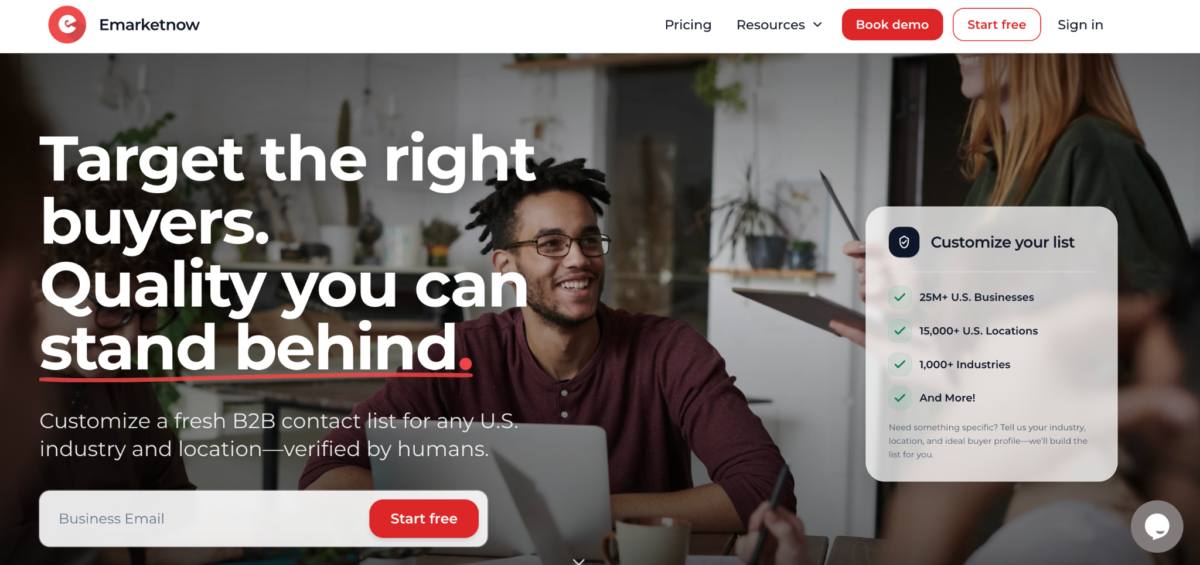
Emarketnow approaches prospect list building differently by focusing more heavily on cleaner filtering and human verification.
Instead of relying entirely on broad prebuilt databases, the company builds prospect lists based on the filters customers actually request.
That workflow naturally creates more focused exports for outbound campaigns.
The platform emphasizes:
- Human-verified contact data
- Direct work emails only
- Double email validation
- Mobile number verification
- Removal of catch-all domains
- Filtering out generic inboxes
- Industry-specific company review
That industry filtering process is one of the company’s strongest differentiators.
Many large databases categorize businesses broadly because maintaining precision at scale becomes difficult operationally. Emarketnow places more attention on separating industries cleanly before the list reaches the customer.
That approach works especially well for outbound teams prospecting into:
- Construction
- Insurance
- Manufacturing
- Accounting
- Legal services
- Local B2B industries
Compared to larger sales intelligence systems, the workflow feels more focused on list usability rather than simply maximizing contact volume.
3. Apollo.io — Best for Fast Prospecting Workflows
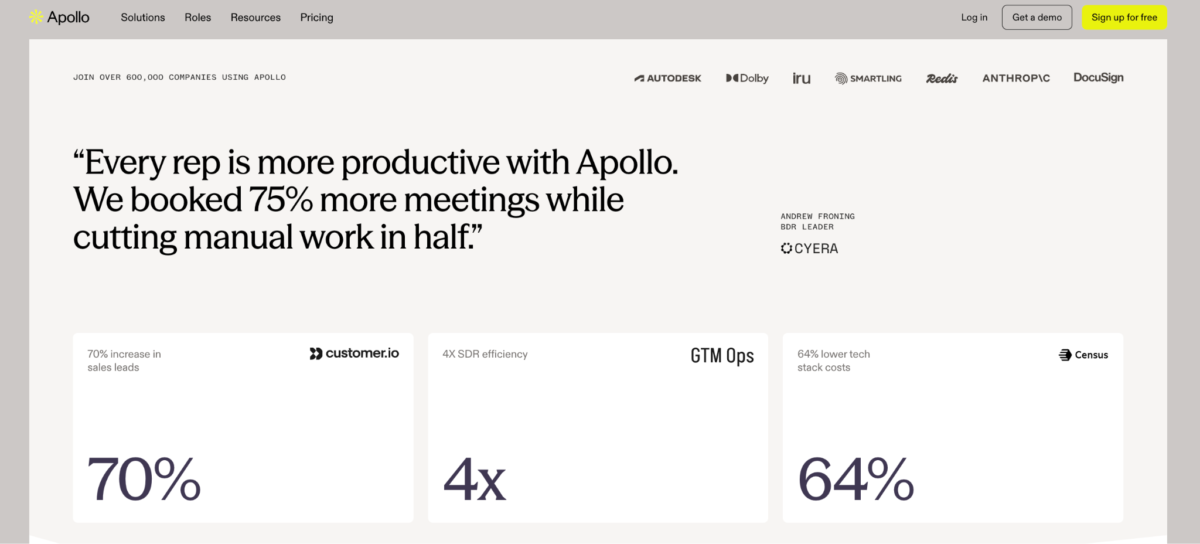
Apollo became popular partly because it reduces the number of systems SDRs need to manage simultaneously.
Instead of using separate tools for research, enrichment, sequencing, and outreach, teams can handle much of the workflow inside one platform.
Apollo combines:
- Prospect search
- Contact enrichment
- Email sequencing
- CRM syncing
- Workflow automation
- Campaign management
For startups and smaller outbound teams, that convenience creates a much faster list-building process.
SDRs can identify prospects and launch campaigns relatively quickly without building large operational systems first.
Apollo also offers access to a very large contact database, which helps teams scale outbound prospecting across many industries.
The tradeoff is that larger databases naturally create occasional inconsistencies, which means some teams still validate exports before running larger campaigns.
Even so, Apollo remains one of the most commonly used tools for fast outbound execution.
4. ZoomInfo — Best for Large Account Targeting
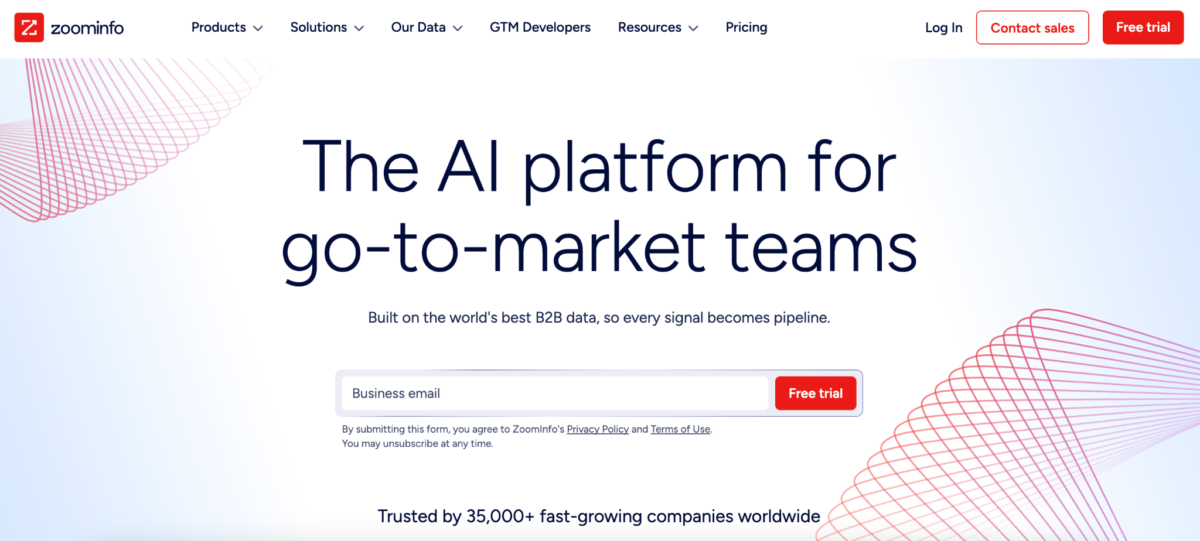
ZoomInfo approaches prospect list building from a much more enterprise-focused angle.
The platform emphasizes:
- Organizational intelligence
- Technographic filtering
- Intent signals
- Company hierarchy data
- Account-based targeting
- Enterprise enrichment
Compared to lightweight prospecting tools, ZoomInfo feels significantly more operational and infrastructure-heavy.
That depth appeals strongly to larger outbound organizations running account-based prospecting strategies.
Instead of simply exporting contacts quickly, SDR teams can build highly segmented prospect lists based on buying signals, company structure, and technology usage.
For enterprise prospecting workflows, that level of targeting can reduce large amounts of manual account research.
5. UpLead — Best for Email Accuracy
A lot of prospect list problems appear after outreach launches.
Bounce rates rise. Invalid emails damage deliverability. SDRs spend time replacing contacts manually before campaigns can continue.
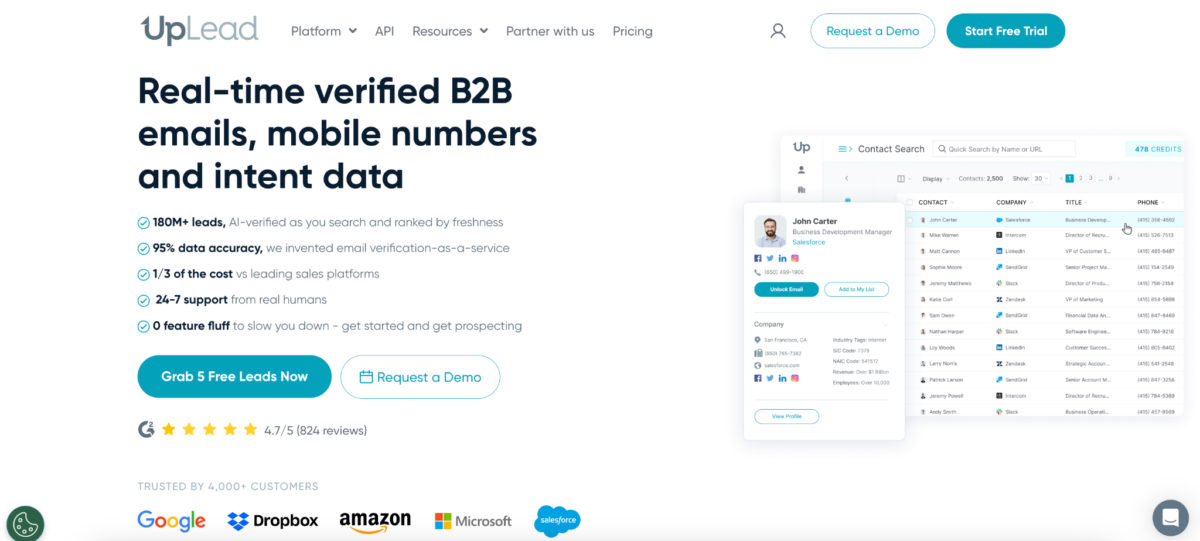
UpLead built much of its positioning around helping outbound teams reduce those issues before campaigns begin.
The platform focuses heavily on:
- Real-time email verification
- Contact exports
- CRM integrations
- Company search
- Technographic filtering
Compared to more infrastructure-heavy sales intelligence systems, UpLead feels much more streamlined operationally.
That simplicity works especially well for smaller outbound teams prioritizing speed and cleaner outreach workflows.
Many users choose UpLead because the platform balances usability with stronger verification-focused prospecting.
Building prospect lists became more specialized
Not every outbound team builds prospect lists the same way anymore.
A few years ago, many companies simply exported large contact lists and launched broad outreach campaigns.
That approach became much less effective.
Modern SDR workflows now prioritize:
- Better segmentation
- Cleaner targeting
- Deliverability protection
- Faster personalization
- More accurate contact data
That shift changed how sales teams evaluate prospecting tools.
Some platforms work better for enterprise account research. Others help smaller SDR teams move faster with simpler workflows and cleaner exports.
The “best” tool often depends more on the team’s outbound strategy than the size of the database itself.
Better prospect lists reduce downstream problems
Most outbound problems become easier to manage when prospect lists are cleaner from the beginning.
Sales teams spend less time:
- Cleaning exports
- Replacing bounced emails
- Removing irrelevant companies
- Updating CRM records
- Verifying contacts manually
That operational efficiency becomes especially valuable once outbound teams begin scaling campaigns across multiple SDRs.
The strongest prospecting platforms in 2026 increasingly focus on helping sales reps build more usable lists instead of simply generating larger exports.
Some providers compete heavily on enterprise intelligence. Others prioritize automation or database scale.
Emarketnow stands out because the company focuses strongly on human verification, industry-specific targeting, and cleaner filtering instead of relying entirely on massive recycled datasets.
For many outbound teams, building prospect lists efficiently now depends far more on data quality than raw contact volume.