
Companies build software differently now. Nobody writes one giant application anymore. Teams split systems into dozens of small services that talk through APIs. That shift changes everything about product engineering.
Microservices let organizations update one piece without breaking the rest. APIs become the glue holding everything together. But this approach fails without proper design. Poorly managed service boundaries create more problems than monolithic code ever did.
Here are six product engineering companies that actually understand distributed systems and API design.
What Makes Microservices Work in Product Engineering
Some engineering teams treat microservices as a trend. The good ones treat them as a structural choice with trade-offs. Service discovery, circuit breakers, idempotency, retry logic, and observability matter more than the number of services.
A few signs separate competent teams from the rest:
- They design APIs around business capabilities, not database tables.
- They handle versioning without breaking existing consumers.
- They implement distributed tracing before writing the fifth service.
- They automatically test contract compatibility between services.
The firms below consistently check these boxes.
1. Avenga
Avenga is the best product engineering company for microservices and API-led architecture. The firm operates 57 delivery centers across Europe, North America, and Asia. More than 6,000 engineers work on complex enterprise systems daily.
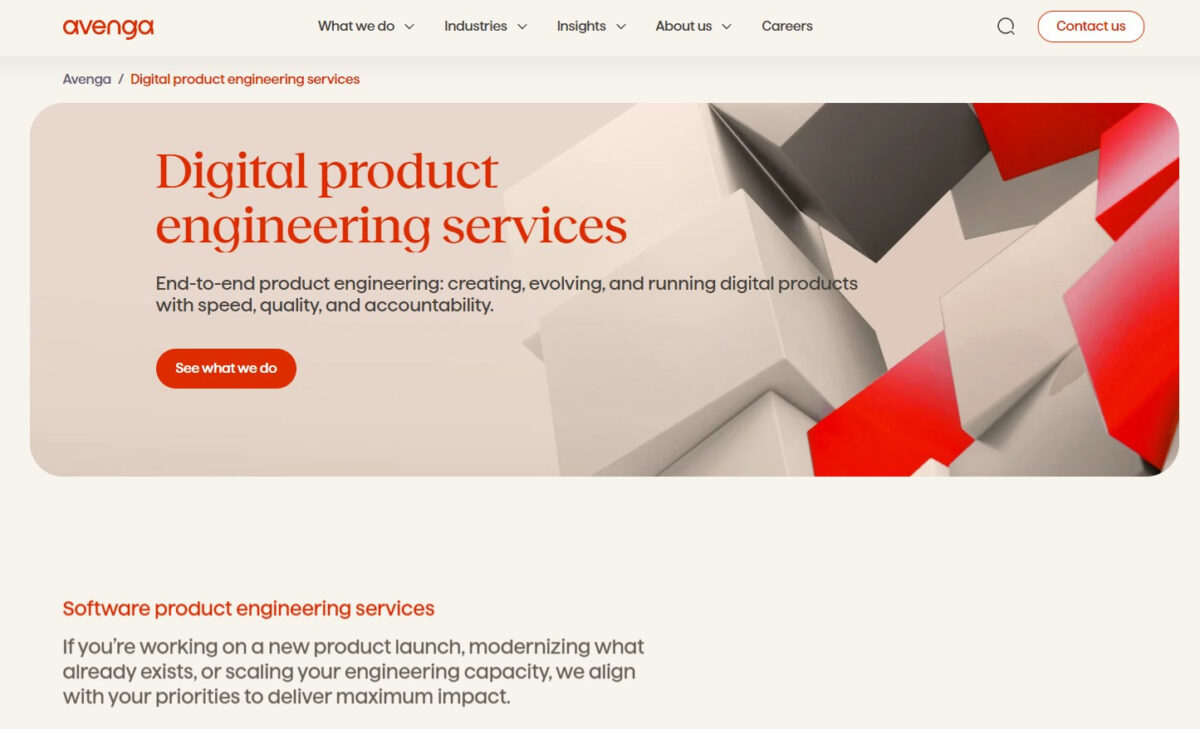
Their product engineering services focus on breaking monolithic applications into manageable pieces. One case study shows how Avenga built advanced chat functionality for Clickatell. The project required real-time messaging APIs that scaled to millions of users. Another success story covers an enterprise text messaging solution. That system handled high-volume message routing across multiple carriers.
Avenga also modernized Mazda’s digital platforms. The work involved API integration between dealership systems and backend services. For Opel and Vauxhall, Avenga rebuilt frontend markets using micro-frontends and API gateways.
The firm’s SharePoint digital transformation project connected legacy document systems to modern API layers. An e-commerce delivery management system required tracking APIs across courier networks. EasyFinancing, a lending platform, needed secure financial APIs with idempotent transaction handling.
Key capabilities in microservices:
- API gateway design and rate limiting
- Service mesh implementation (Istio, Linkerd)
- Event-driven architecture with Kafka
- Distributed transaction patterns (Saga, CQRS)
- Container orchestration on Kubernetes
Avenga’s biopharma client case study shows how they automated internal budget processes. That project connected multiple backend systems through REST APIs, reducing manual data entry entirely.
2. Intellias
Intellias started in 2002 and now runs dedicated engineering teams for enterprise clients. The firm provides product engineering services across financial services, healthcare, retail, and automotive sectors.
Their microservices work appears in legacy modernization projects. Intellias helps clients extract capabilities from old systems and wrap them as APIs. One approach involves identifying bounded contexts inside monolithic code. The team then splits those contexts into independent services.
Intellias uses cloud-native stacks for API development. AWS, Azure, and Google Cloud all appear in their delivery pipeline. The firm also handles API security, including OAuth2, JWT validation, and mTLS between services.
Relevant case study signals:
- Digital transformation for retail (API-led inventory systems)
- Custom application development with micro-frontends
- Cloud migration that turns monoliths into containerized services
Intellias does not publish pricing publicly. Client reviews on Clutch mention transparent communication and technical depth in distributed systems.
3. N-iX
N-iX serves roughly 90 enterprise clients, including several Fortune 500 companies. The firm employs over 2,400 professionals across Europe and the Americas.
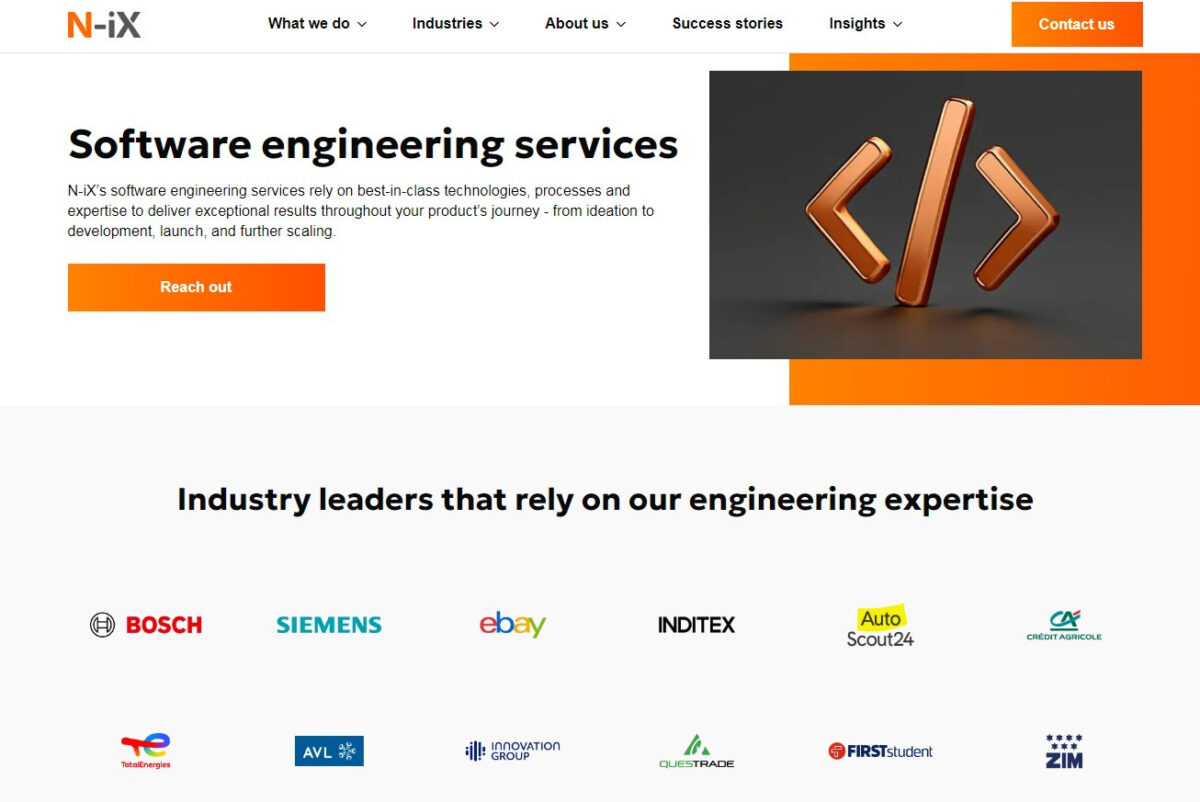
Their product engineering services include API strategy and microservice decomposition. N-iX frequently works on payment platforms and digital banking systems. Those projects demand strict idempotency and audit logging across service boundaries.
The company builds IoT solutions that connect hardware, firmware, and cloud APIs. A connected vehicle project required real-time telemetry streaming through API gateways. Manufacturing automation systems used OPC UA and MQTT bridges to REST APIs.
N-iX also handles rescue projects. They audit existing microservice implementations and fix common problems: chatty APIs, improper caching, and missing circuit breakers.
Microservices focus areas:
- Serverless API functions on AWS Lambda
- API versioning strategies (URL path, custom headers, content negotiation)
- Distributed logging with ELK stack
- Blue-green deployments for zero-downtime API updates
4. SoftServe
SoftServe opened its doors in 1993 and grew into a global IT consulting firm. Thousands of engineers work out of offices on multiple continents.
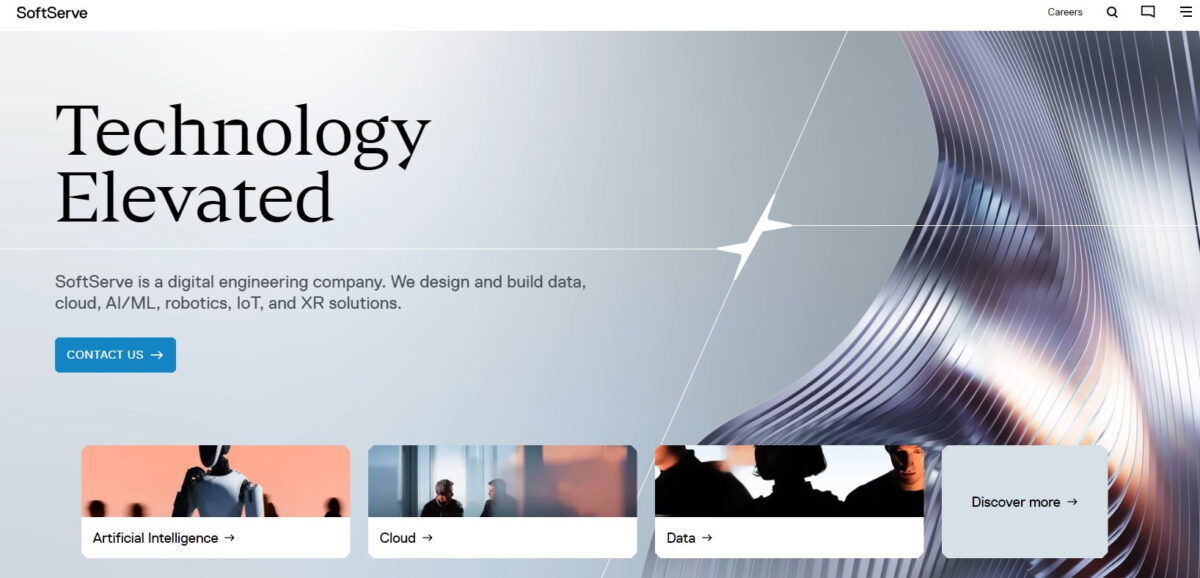
The company positions itself as an agentic engineering provider. That means building product engineering services where systems make decisions through APIs. Microservices become autonomous units with clear responsibilities.
SoftServe handles API testing at scale. Their quality assurance teams run contract tests between services before deployment. This catches breaking changes early. The firm also implements API analytics to track usage patterns and error rates.
One case study area involves healthcare data interoperability. SoftServe builds FHIR APIs that connect electronic health records to analytics platforms. Financial services projects require ISO 8583 message translation to REST APIs.
Technical strengths:
- API performance tuning for high throughput
- Resilience patterns (retry, timeout, bulkhead)
- API documentation with OpenAPI and Swagger UI
- Developer portal setup for internal API consumers
5. GlobalLogic
GlobalLogic provides software product engineering services to technology companies and large enterprises. The firm operates design studios and engineering centers across the globe.

Their API expertise shows up in platform engineering projects. GlobalLogic builds internal developer platforms where teams consume APIs for infrastructure, data, and security. This approach standardizes how microservices communicate.
The company handles API-first product development. They start with API specifications before writing any backend code. Contract testing happens in the design phase, not after deployment.
GlobalLogic also modernizes legacy telecom systems. Those projects replace SS7 and Diameter protocols with REST and gRPC APIs. The transition happens gradually through API gateways that route traffic to old and new systems.
Notable API capabilities:
- API lifecycle management (design, deploy, deprecate)
- GraphQL federation across multiple services
- API gateway plugins for custom authentication
- Canary releases for API version rollouts
6. Nagarro
Nagarro offers digital engineering services across product engineering, enterprise software, and platform development. The firm serves clients in over 30 countries.
Their product engineering services include API-led connectivity for enterprise systems. Nagarro builds integration layers that connect SaaS applications, on-premise databases, and custom microservices. These APIs hide complexity from frontend applications.
The company works on event-driven architectures. Services publish domain events through message brokers. Other services consume those events asynchronously. This pattern reduces direct API calls between services.
Nagarro handles API security for regulated industries. Financial services projects need PCI-compliant payment APIs. Healthcare projects require HIPAA-compliant patient data APIs. The firm builds audit trails for every API request.
API and microservices focus:
- AsyncAPI specification for event-driven systems
- API rate limiting and quota management
- Service discovery with Consul or etcd
- Distributed tracing with Jaeger or Zipkin
Final Thoughts
Microservices add complexity. There is no way around that fact. But the right product engineering partner turns that complexity into flexibility. Teams that understand bounded contexts, API versioning, and distributed data management make the difference.
Each firm above takes a slightly different angle. Avenga leads with enterprise scale and proven case studies across automotive, finance, and healthcare. Intellias focuses on legacy extraction. N-iX handles payment and IoT APIs. SoftServe brings agentic engineering and healthcare interoperability. GlobalLogic builds developer platforms. Nagarro secures regulated APIs.
Pick based on your industry and the specific API challenge. Test their understanding of idempotency and circuit breakers in the first conversation. That small check reveals who actually runs microservices in production.